








Website security has become one of the most important aspects of running a successful online business. Whether you own a small business website, an e-commerce store, a blog, or a corporate portal, protecting user information should be a top priority. One of the simplest and most effective ways to secure a website is by using an SSL certificate.
Today, internet users expect websites to be safe and trustworthy. When visitors see the padlock icon in their browser, they feel more confident sharing information, making purchases, or filling out forms. SSL certificates help create this trust while protecting sensitive data from cyber threats.
This article explains what SSL certificates are, how they work, and why they are essential for modern websites.
What Is an SSL Certificate?
SSL stands for Secure Sockets Layer. It is a security technology that creates an encrypted connection between a website and a user’s browser. Modern websites actually use TLS (Transport Layer Security), but the term SSL is still widely used.
An SSL certificate ensures that data exchanged between a website and its visitors remains private and secure. This includes:
- Login credentials
- Personal information
- Contact form submissions
- Payment details
- Banking information
- Business data
When a website has an SSL certificate installed, its URL begins with HTTPS instead of HTTP. The “S” stands for “Secure.”
For example:
- http://example.com (Not Secure)
- https://example.com (Secure)
The secure version encrypts information before it is transmitted across the internet.
How SSL Certificates Work
SSL certificates use encryption to protect information during transmission.
Here is a simple explanation of the process:
- A visitor opens a website.
- The browser requests a secure connection.
- The website presents its SSL certificate.
- The browser verifies the certificate.
- A secure encrypted connection is established.
- Data is safely transferred between the user and the website.
Even if someone intercepts the communication, the encrypted data cannot be easily read or misused.
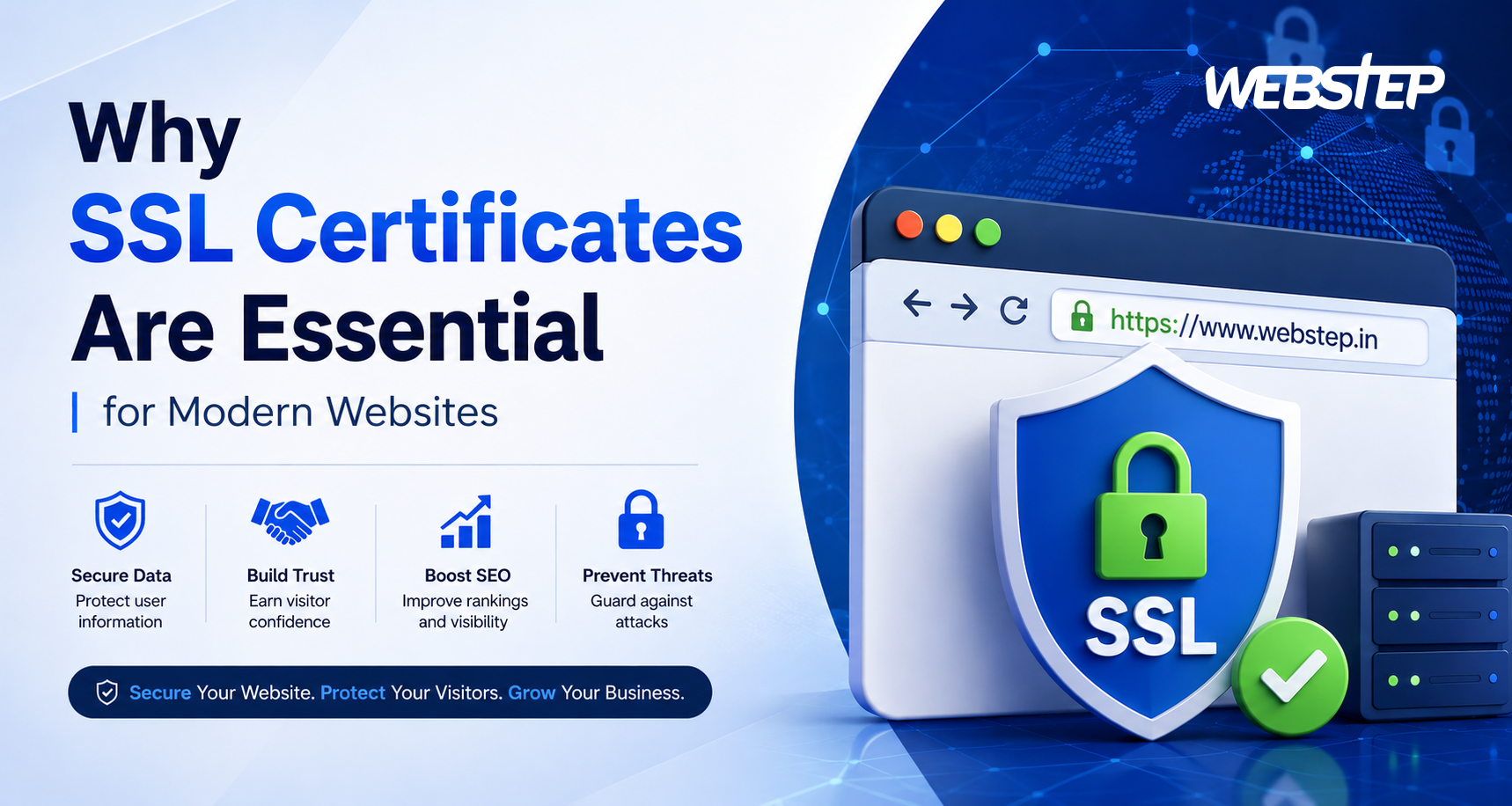
Why SSL Certificates Are Essential for Modern Websites
1. Protect Sensitive User Data
The primary purpose of an SSL certificate is data protection.
Visitors often share sensitive information online, such as:
- Names
- Email addresses
- Phone numbers
- Passwords
- Credit card details
Without SSL encryption, this information can be vulnerable to cybercriminals.
SSL certificates ensure that personal and financial data remains secure while being transmitted between users and websites.
2. Build Trust and Credibility
Trust plays a major role in online success.
When visitors see a secure HTTPS connection and a padlock icon in the browser, they feel more comfortable interacting with the website.
A secure website demonstrates that the organization values user privacy and security.
Benefits of increased trust include:
- Higher visitor confidence
- Better customer relationships
- Increased lead generation
- Improved online reputation
For businesses, trust often translates directly into higher conversions and customer retention.
3. Improve Search Engine Rankings
Search engines prioritize user safety.
Google has confirmed that HTTPS is a ranking factor. Websites with SSL certificates may have an advantage over non-secure websites in search results.
Although SSL alone will not guarantee top rankings, it contributes to a stronger SEO strategy by:
- Improving website security
- Enhancing user experience
- Increasing visitor confidence
- Supporting search engine requirements
For businesses investing in digital marketing and SEO, SSL is an essential foundation.
4. Prevent Browser Security Warnings
Modern browsers actively warn users when they visit websites without SSL protection.
Visitors may see messages such as:
- “Not Secure”
- “Your connection is not private”
- Security warning notifications
These warnings can discourage users from continuing on the website.
Many visitors leave immediately when they encounter security alerts, resulting in:
- Increased bounce rates
- Reduced engagement
- Lost business opportunities
Installing an SSL certificate helps eliminate these warnings and creates a smoother browsing experience.
5. Prevent Browser Security Warnings
For e-commerce websites, SSL certificates are mandatory.
Online stores process sensitive payment information and customer data daily. Without proper encryption, this information could be exposed to cyber threats.
SSL certificates help secure:
- Payment gateways
- Checkout pages
- Customer accounts
- Transaction details
This protection is critical for maintaining customer trust and meeting industry security standards.
6. Verify Website Authenticity
SSL certificates do more than encrypt data. They also verify the identity of the website owner.
This verification helps users confirm they are interacting with a legitimate website rather than a fraudulent copy.
Identity verification reduces the risk of:
- Phishing attacks
- Fake websites
- Identity theft
- Online scams
As cyber threats continue to grow, website authenticity becomes increasingly important.
7. Support Regulatory Compliance
Many industries have strict requirements regarding data protection and privacy.
Organizations that collect personal information often need to implement security measures to comply with regulations and industry standards.
SSL certificates help businesses strengthen their compliance efforts by protecting customer information and securing communications.
Although SSL alone may not satisfy all compliance requirements, it is an important security component.
Types of SSL Certificates
Different websites require different levels of security and validation.
Domain Validation (DV) SSL
This is the most basic type of SSL certificate.
Features:
- Quick verification process
- Suitable for blogs and small websites
- Provides encryption protection
Organization Validation (OV) SSL
This certificate verifies both the domain and the organization.
Features:
- Higher level of trust
- Suitable for business websites
- Includes company verification
Extended Validation (EV) SSL
This provides the highest level of verification.
Features:
- Thorough validation process
- Strong business credibility
- Ideal for financial institutions and large organizations
Best Practices for SSL Implementation
To maximize security benefits:
- Install SSL on every page of your website.
- Redirect HTTP traffic to HTTPS.
- Renew certificates before expiration.
- Use trusted certificate authorities.
- Regularly monitor website security.
- Keep website software updated.
Following these practices helps maintain a secure and reliable online presence.
Conclusion
SSL certificates have become a necessity for modern websites. They protect sensitive data, build user trust, improve search engine visibility, and help prevent security threats. Whether you operate a personal blog, a corporate website, or an online store, SSL plays a critical role in safeguarding both your business and your visitors.
As cyber threats continue to evolve, website security can no longer be treated as an optional feature. Implementing an SSL certificate is one of the most effective and affordable steps organizations can take to create a secure, trustworthy, and professional online presence. By adopting SSL, businesses can enhance customer confidence, strengthen their digital reputation, and support long-term online success.